The Agentic Handoff Receipt
A PM-to-agent handoff is not ready when the spec sounds polished. It is ready when the receipt makes the work reviewable.
A PM-to-agent handoff is not ready when the spec sounds polished.
It is ready when the receipt makes the work reviewable.
That distinction is becoming one of the most important operating rules for AI-forward product teams.
The agent can draft the ticket. The agent can propose the implementation plan. The agent can search the codebase, open files, write tests, and produce a pull request. Those abilities are useful. They also raise the cost of a weak handoff.
If the input is thin, the agent does not only move faster. It moves faster in a direction nobody has inspected.
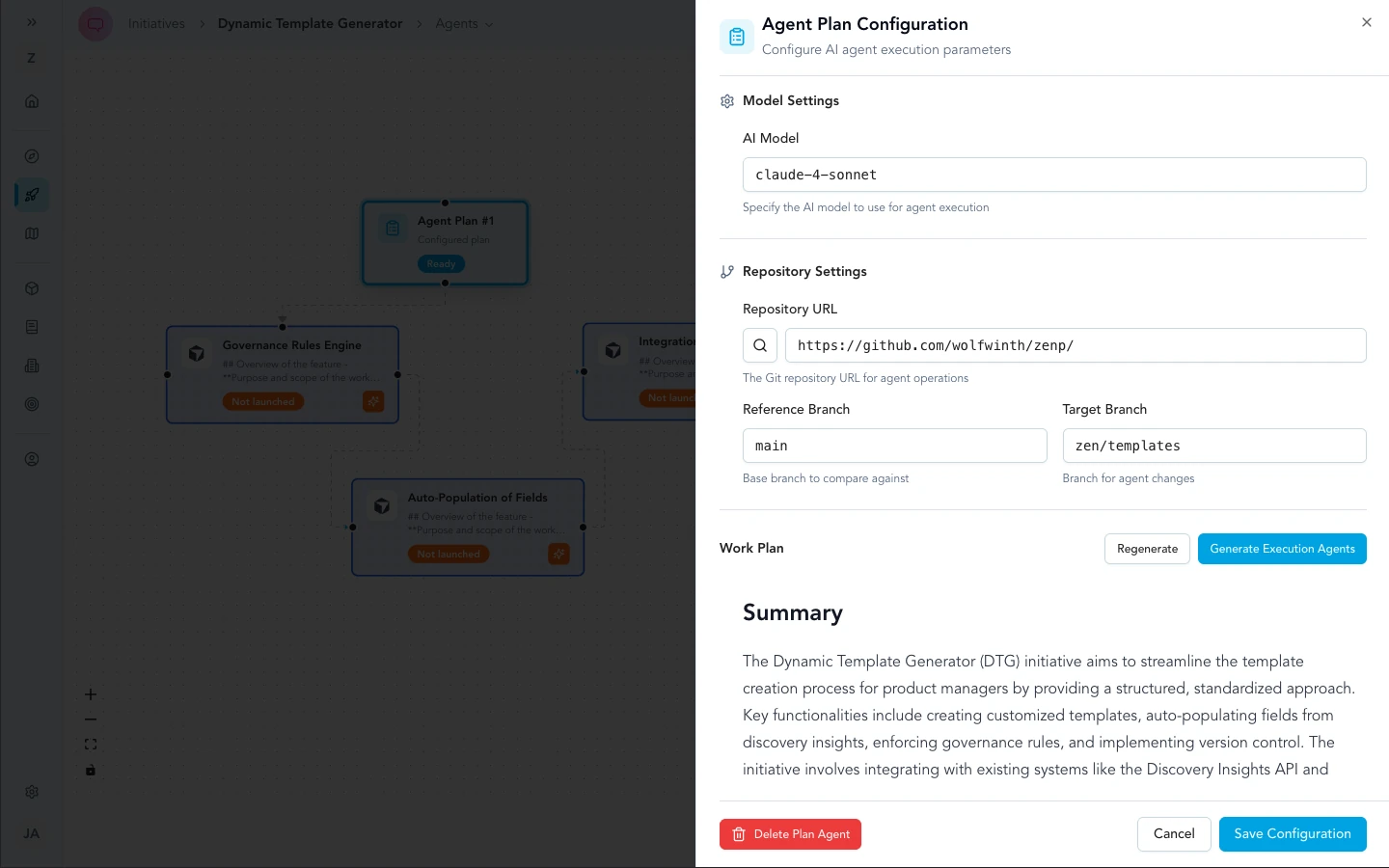
The newest version of this risk ships as a feature. Product tools now offer one-click pushes into Claude Code, Codex, or Cursor: generate the spec, press the button, and the work belongs to engineering now. The demo is impressive, and the integration is real. But a push is not a handoff. A handoff has two sides: what the agent received, and what came back. A tool that shows you only the first half has not handed off the work. It has thrown it.
The failure mode
Most bad handoffs do not look bad at first.
They have a clean title. They have bullets. They have acceptance criteria. They have a user story. The work is easy to assign and easy to estimate.
The problem appears later, when someone asks:
- Which customer evidence caused this?
- Which constraint should not be violated?
- Which alternative did we reject?
- Who owns the product decision?
- What should make the agent stop?
If the spec cannot answer those questions, the handoff is not ready for autonomy. It may be ready for a human conversation. It may be ready for a draft. It is not ready to create downstream work without review.
The receipt
The agentic handoff receipt is a small operating artifact.
It has 8 fields:
- Intent. What product decision or customer outcome does this work serve?
- Evidence. Which calls, tickets, usage patterns, CRM notes, or other sources support the work?
- Constraints. What technical, customer, business, compliance, timing, or scope limits should shape the solution?
- Acceptance criteria. What must be true before the work is considered done?
- Owner. Who is accountable for the product call?
- Review gate. Which action needs human approval before the agent writes, creates, updates, sends, or merges?
- Telemetry. How will the team know whether the handoff reduced ambiguity, rework, latency, or customer friction?
- Stop condition. What evidence gap, risk signal, or failed check pauses the workflow?
This receipt should be short enough to fill out in 5 minutes and strong enough to stop bad work before it becomes expensive.
Why agents need this
Agentic systems are easiest to demo in clean environments. Product work is not a clean environment.
The codebase has history. The customer promise has nuance. The sales team has commitments. The roadmap has tradeoffs. Support has context the spec did not include. The PM knows why a shortcut would be unacceptable, but the agent only knows what the workflow exposes.
That is why "human in the loop" is too vague.
The question is not whether a human clicks approve. The question is what the human is approving.
A receipt gives the reviewer something concrete to inspect. It changes the approval from "does this look reasonable?" to "does this work preserve the intent, evidence, constraints, and stop conditions we agreed on?"
A simple example
Imagine a PM wants an agent to draft tickets for a dashboard improvement.
The weak handoff says:
Improve the account health dashboard so CSMs can see renewal risk faster.
That is plausible, but it is thin.
The receipt version says:
- Intent: CSMs need to identify renewal risk caused by unresolved product blockers before QBR prep.
- Evidence: 6 support threads, 3 CSM notes, 2 renewal calls, and 1 internal escalation attached to the same account-health pattern.
- Constraints: do not introduce a new scoring model in this iteration; use existing account and ticket states.
- Acceptance criteria: dashboard shows blockers, source count, last updated date, and owner; CSM can open the evidence trail in one click.
- Owner: Product lead for accounts workflow.
- Review gate: PM approves the field mapping before tickets are created.
- Telemetry: track time to identify blocker sources during QBR prep and number of follow-up clarifications from CSMs.
- Stop condition: pause if source mapping requires unsupported CRM fields.
Now the agent has a better task. More importantly, the human reviewer has a better object.
The product team still owns judgment
The purpose of a receipt is not to slow agents down until they become manual tools again. The purpose is to make speed safe enough to trust.
Some work can run with light review. Some work needs explicit approval. Some work should not be delegated until the source evidence improves.
The difference depends on what the agent can change.
An agent that drafts a private outline needs a lighter gate than an agent that creates tickets. An agent that proposes a spec needs a lighter gate than an agent that updates a customer-facing page. An agent that opens a pull request needs a different contract from an agent that summarizes support notes.
Governance should follow blast radius.
The receipt makes blast radius visible.
Where Zentrik fits
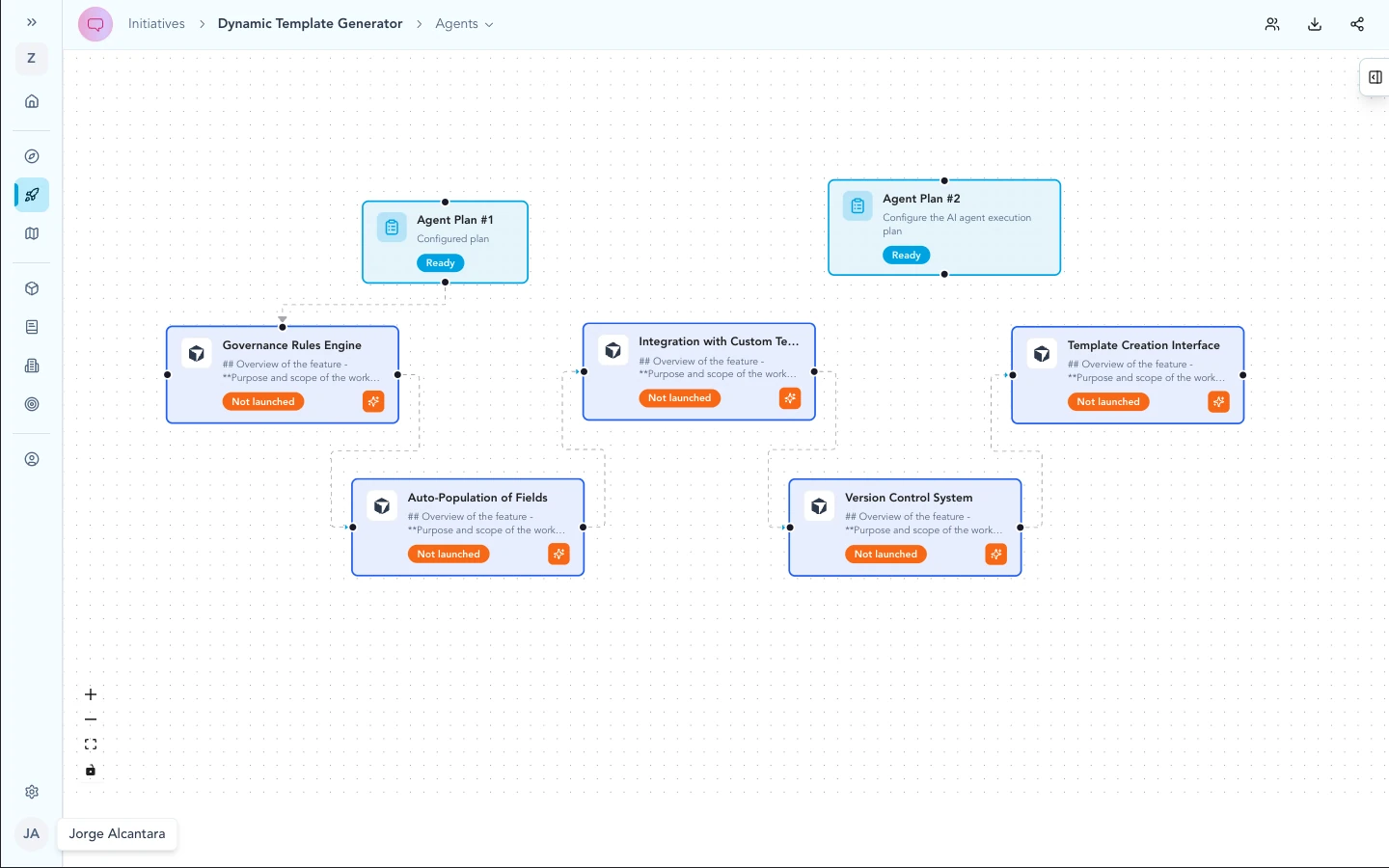
Zentrik is built to make this handoff easier because the product graph already connects the pieces the receipt needs.
Customer signal, opportunities, initiatives, specs, delivery work, and review state should not live as disconnected documents. They should be linked enough that a PM can ask an agent to act with the right context and still keep the human review gate in place.
The receipt also has a return side. What the agent did should come back into the same graph, attached to the intent that authorized it, so the reviewer inspects the actual work against the actual constraints rather than a memory of the request, or a pull request that arrived with its reasons stripped.
Record that return explicitly: accepted, returned for changes, blocked, or stopped. Include the artifact inspected, the checks that passed or remain unresolved, the reason for the review decision, and the owner of the next action. A merged pull request is one state in that history; it does not prove that the change reached production or helped a customer.
The goal is not autonomous product management.
The goal is agent-assisted product work where the product team's intent remains auditable.
The test
Take 1 AI-assisted handoff your team is considering this month.
Before an agent creates tickets, specs, roadmap updates, customer notes, or code changes, fill out the 8 fields:
Intent. Evidence. Constraints. Acceptance criteria. Owner. Review gate. Telemetry. Stop condition.
If you can fill them out quickly, the workflow is probably ready to move.
If you cannot, the agent can still help draft the missing pieces. But it should not be trusted with downstream action yet.
That is the line.
The agent is not ready when it can act.
It is ready when the receipt makes the action reviewable.