Give every agent the product truth before it codes.
Zentrik turns customer signal, decisions, constraints, and delivery context into the operating layer your AI builders can actually execute.

Context in motion
Signal
Calls + research
Decision
Approved intent
Guardrail
Non-goals
Zentrik
Context compiled with evidence and constraints
Cursor
Builder plan
Jira
Synced scope
Claude
Sourced answer
The real bottleneck
Execution is cheap now. Misalignment is not.
Code can move faster than product context. Zentrik keeps the decision, evidence, and guardrails close enough for people and agents to act on.
01
Agents stop guessing the product
They start with the customer evidence, decision, constraints, and acceptance checks the team already agreed on.
02
PMs stop repeating context
The same product call can travel into Cursor, Claude, Jira, docs, and review without being rewritten by hand.
03
Leaders can trust faster work
Delivery moves faster without becoming a black box because every plan points back to the decision that authorized it.
What Zentrik changes
Keep product judgment attached before code starts
Zentrik connects the evidence, decision, constraints, and scope so PMs do not rewrite the same context for every agent, ticket, and review.
Connected stack
Customer signal
Product truth
Team memory
Builders
Without product context
A PM rewrites the background for every agent, ticket, and review.
With Zentrik
The decision, evidence, constraints, and scope stay linked.
Without product context
The agent sees the repo, then guesses the business rule.
With Zentrik
The agent starts from the approved product call and the guardrails around it.
Without product context
Shipping faster creates more product review when context is missing.
With Zentrik
Teams catch drift before it spreads through branches, tickets, and docs.
How it works
From customer signal to builder-ready work
Teams use Zentrik to connect feedback, decisions, scope, and guardrails before work reaches Jira, Cursor, Claude, or code review.
01 / Understand demand
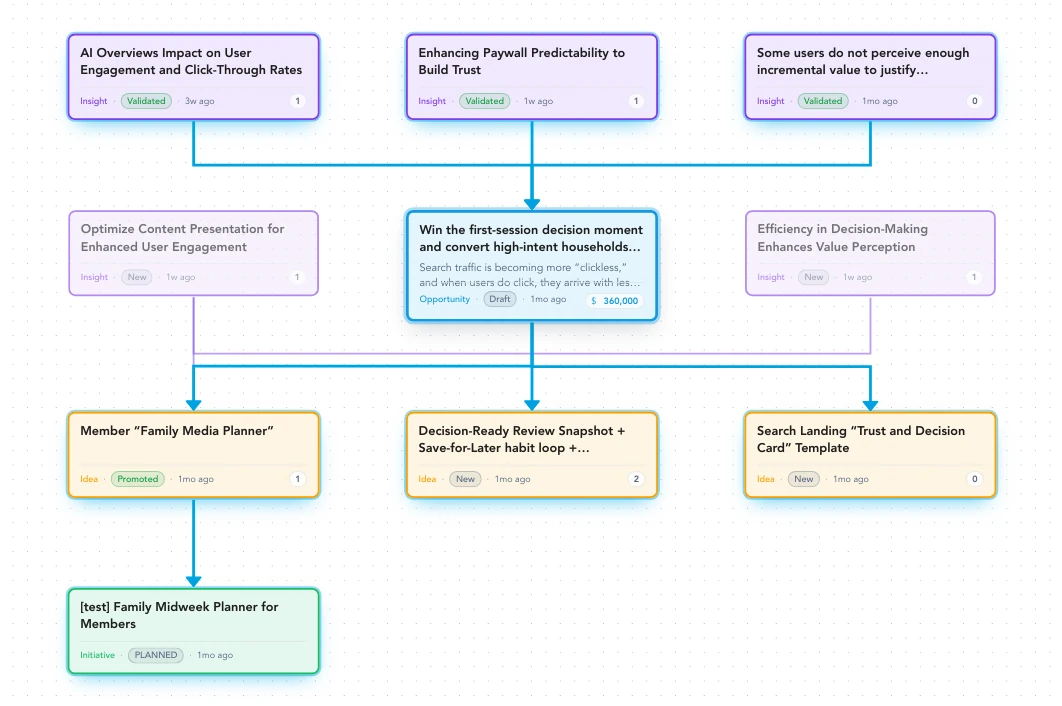
Find the pattern in customer signal
Zentrik brings calls, tickets, docs, research notes, and Jira history together so teams can see what customers keep asking for and why it matters.
Group repeated needs without losing the source evidence
Trace decisions back to customer language and business context
Give PMs, engineers, leaders, and agents the same view of the problem
02 / Shape the decision
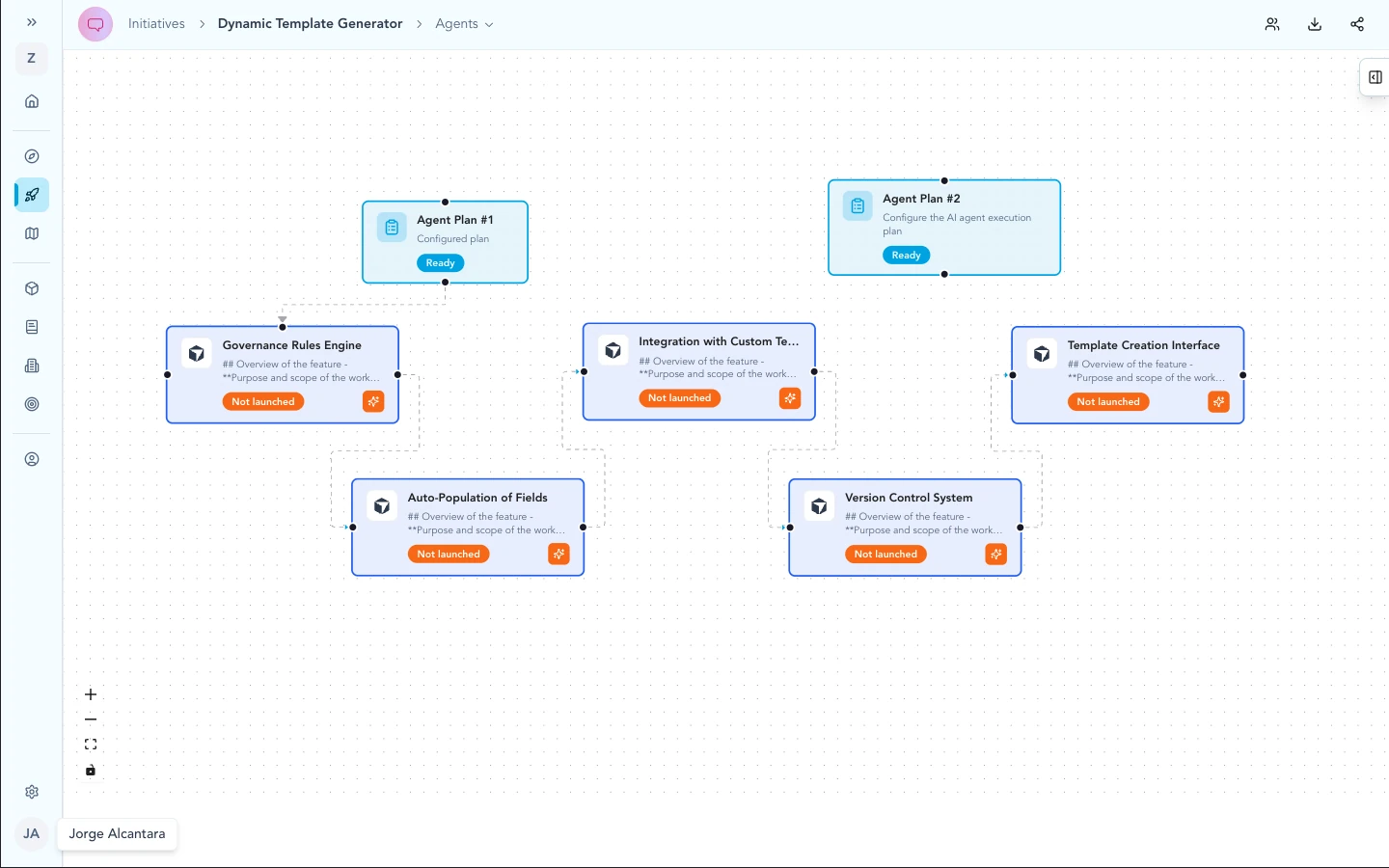
Turn the product call into builder-ready scope
Before work reaches the IDE, Zentrik captures the scope, constraints, non-goals, acceptance checks, source links, and open questions behind the decision.
Brief Cursor, Claude, and ChatGPT from the same approved scope
Keep dependencies and ruled-out paths visible before work starts
Sync Jira without breaking the link back to product intent
03 / Keep delivery aligned
Keep context attached as work changes
Zentrik keeps the decision available through agent sessions, engineering questions, reviews, and the next planning cycle.
Recover why a priority moved without replaying old meetings
Review agent plans against the decision that created them
Keep Jira, docs, and builder tools aligned as scope changes
Choose the path
Start from the workflow your team is trying to improve
Start with the system view, then move into the specific product handoff your team needs next.
About to hand work to an agent? Run the five-question handoff check.
FAQ
Questions product leaders ask before bringing this to the team
The questions behind cost, adoption, and trust.
Make the next agent run start from what your team already knows.
Choose an initiative, keep the decision and guardrails attached, and give builders the context they need before code starts moving.
Works with