What Was in the Other 1,800 Calls
After the 20 calls everyone talks about, the rest of the library still holds the roadmap. Here is what we keep finding when that signal finally flows into structure.
If you read the first essay in this series, you already know the setup. A real team. A real Gong library. 1,826 customer conversations in 1 quarter, logged and tagged. About 20 of them had been reviewed for product insight. The rest, roughly 1,800, were not ignored on purpose. They were impossible to get to at human speed.
This post is about what lives in that tail. Not a lecture on Gong. A look at the shape of what you are leaving on the table when only the loudest slice of the library ever becomes a decision.
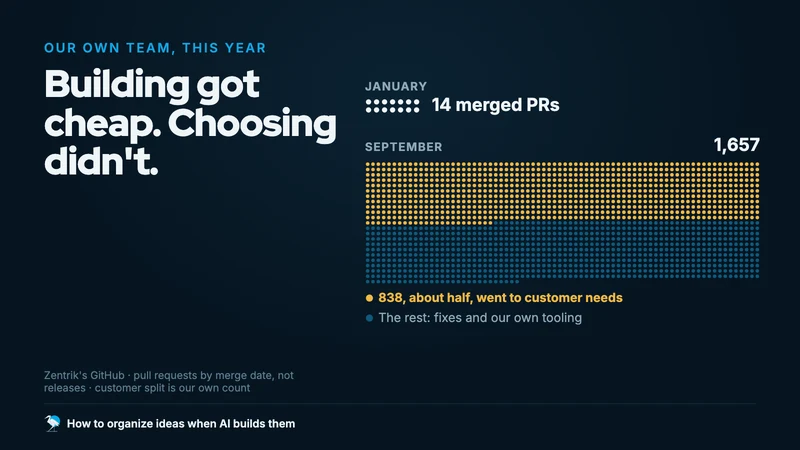
The roadmap is not driven by the 1,826 calls. It is driven by the 20 that happened to surface.
What usually survives the firewall
Most orgs develop a few honest habits that feel like rigor and quietly cap how much signal ever reaches product.
Someone clips a moment in Slack. A PM watches, takes a note, maybe files a ticket. A CS lead forwards a thread with "flagging for visibility." Once a quarter, someone runs a report, exports a pivot table, and drops it in a deck. By the time that deck influences a priority conversation, the calls that would have changed the answer are three layers deep in a folder nobody opens the same week.
None of that is laziness. It is bandwidth. The library grows faster than any one role can read it. So the org defaults to a sample: what was loud, what was recent, what was politically easy to escalate.
The sample is not random. It is biased toward drama, toward accounts that already have airtime, toward whatever fit in the last planning window. The rest of the library is still customer truth. It just never got a ticket.
What we keep finding in the other 1,000
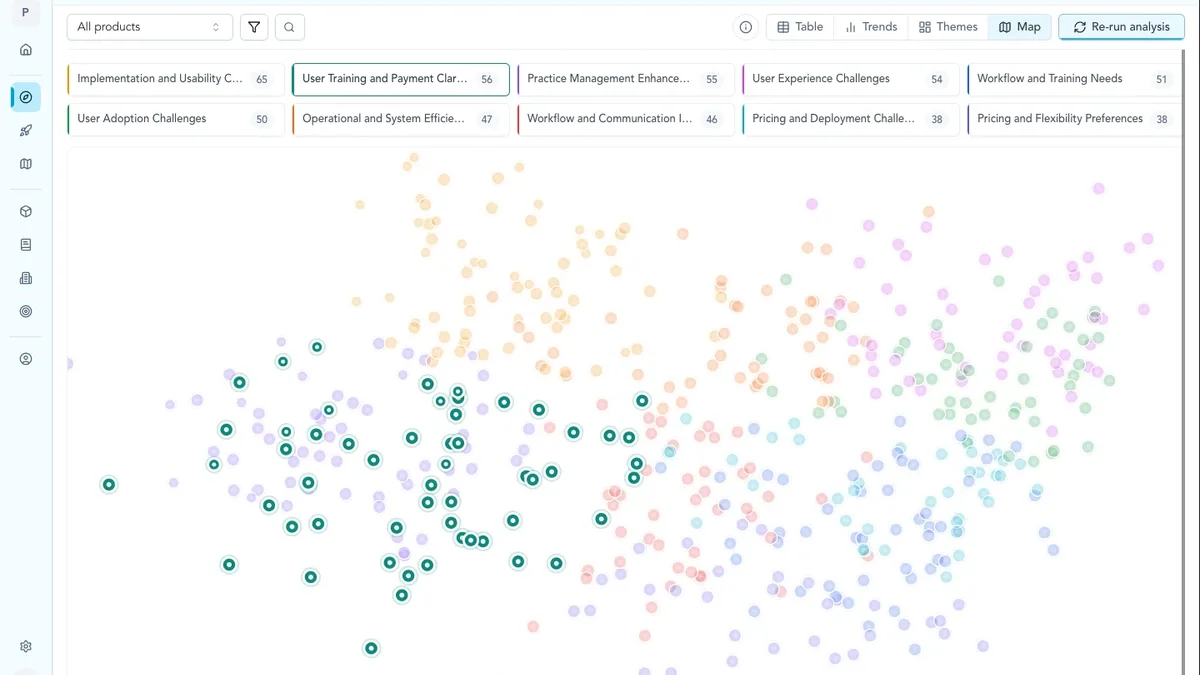
When teams finally connect that tail into a structured graph, the surprises are not exotic. They are obvious in hindsight.
Renewal language that never made it to product. A VP says "we are fine" on a call while implementation describes workarounds that burn hours every week. The workaround is boring in isolation. Across 12 accounts it is a retention risk nobody had on 1 slide.
Competitor mentions that lived in sales notes. Not the dramatic "they dropped their price" story that made Slack. The quiet "we are evaluating both vendors for workflow X" line that repeats in calls nobody tagged as competitive.
Workflow hacks that are product in disguise. "We export to CSV and rebuild every Monday" is not a charming anecdote when it shows up in 20 transcripts. It is a reliability bet someone already decided without product in the room.
The same pain described 5 different ways. CS says "integration delays." Sales says "blocked rollout." The customer says "my team lost trust in the export." Without structure those are 3 threads. With clustering they are 1 opportunity with a number behind it.
None of this requires a new research budget. It requires a path from "recorded" to "classified and comparable" that does not depend on a PM reading every hour of audio.
Why quarterly synthesis loses the race
Quarterly reports are not evil. They are just slow relative to how fast your company generates new calls and tickets.
By the time a deck lands in a roadmap review, the library has already moved. The pattern that mattered peaked 6 weeks ago. The account that needed a proactive reach-out already slipped into churn risk. The "urgent" escalation in Slack was a symptom, not the root, and the root was sitting in call 1,412.
Continuous ingestion is not about drowning the PM in alerts. It is about letting the graph absorb new evidence on the cadence the business actually produces it, so when someone asks "what changed since we last met?" there is an answer that is not memory.
What changes when the pipe stays open
We have spent months wiring Zentrik's discovery graph to the places signal already lives. Gong, Zendesk, Confluence, CRM exports, and the API for everything else.
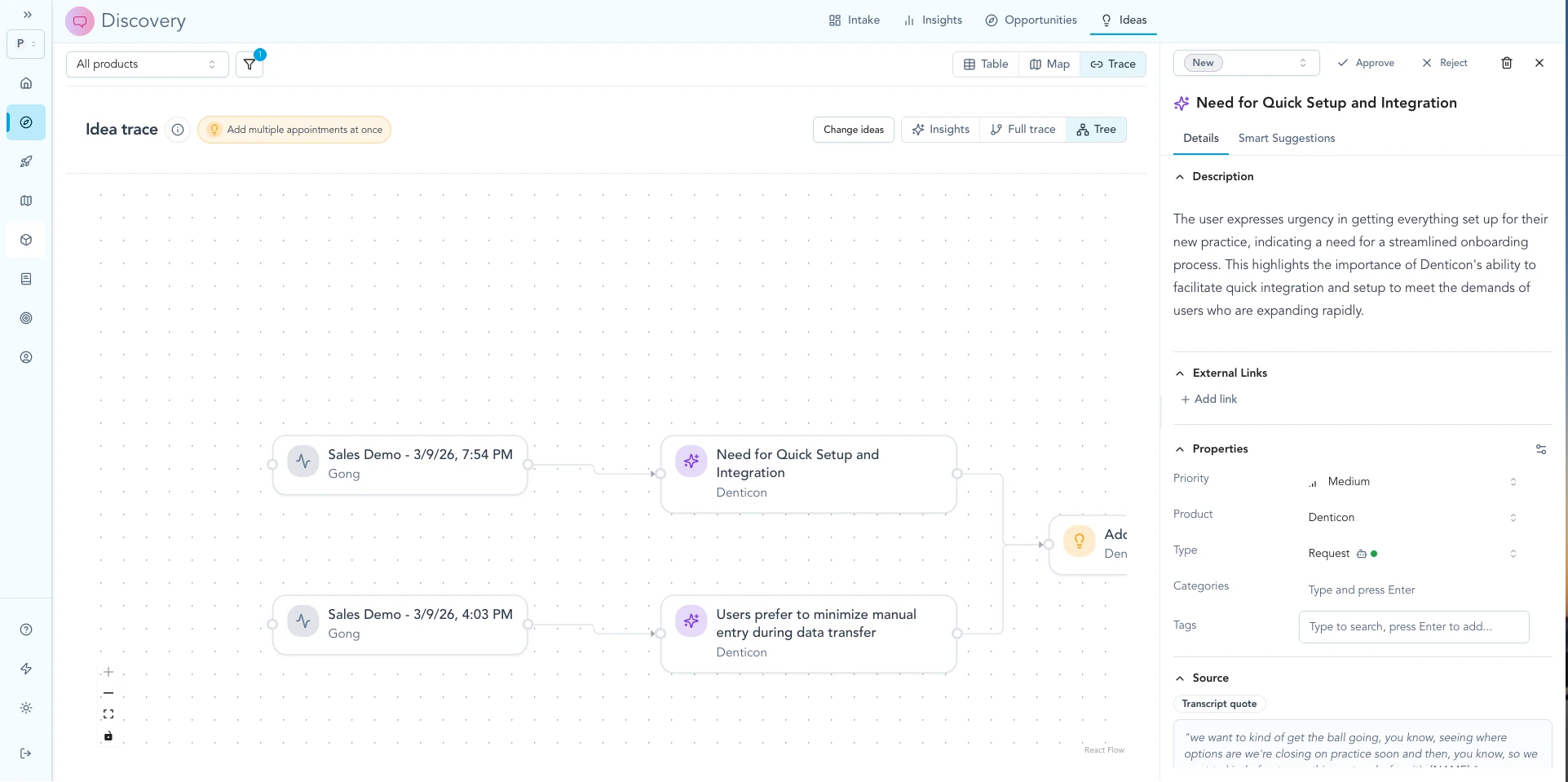
The difference between "we query the library when we remember" and "signal lands into the same graph as insights and opportunities" is not incremental. It is a different posture.
An opportunity that looked medium last month can read as urgent this week because the volume of corroborating calls around 1 pain jumped. Support trends show up as product signal instead of as a forwarded thread. A new PM can read why a bet was deprioritized 18 months ago from the linked doc, not from oral history.
That is the bridge to last week's piece: flat context and pretty summaries do not replace a graph where evidence, ARR, and tradeoffs stay attached. The library is only as good as the plumbing that lets it feed that graph.
The noise question
The first objection is always noise. Gong is not a product research instrument. Some calls are pricing theater. Some are pure relationship maintenance.
Fair. Which is why the useful systems do not pretend every minute is equal. Source-specific extraction, classification with human review at the edges, and a taxonomy queue for weird cases are how you keep the graph honest. The AI does the part humans cannot do at volume. Humans do the part that encodes judgment.
The goal is not "replace the PM." It is stop making the PM defend the roadmap from a 5% sample of what customers already said.
Where this sits in the series
We started with speed versus judgment. We then showed why flat context and summaries are not enough. This is the volume story in plain language: what sits in the tail, and why continuous ingestion matters.
The next question is trust. When models classify at scale, the organization still has to answer who confirmed what and produce the receipts behind the decision.
If you want this running on your own sources, create a workspace at zentrik.ai/register. If you prefer a walkthrough first, zentrik.ai/contact. For how connectors fit together, start at zentrik.ai/docs/integrations.
For the stack-level implication of that signal problem, read The PM Stack Was Built to Store Things.
Evidence traceability
Follow the signal into the decision
Subscribe for the next field note on evidence, decisions, and agentic product work.